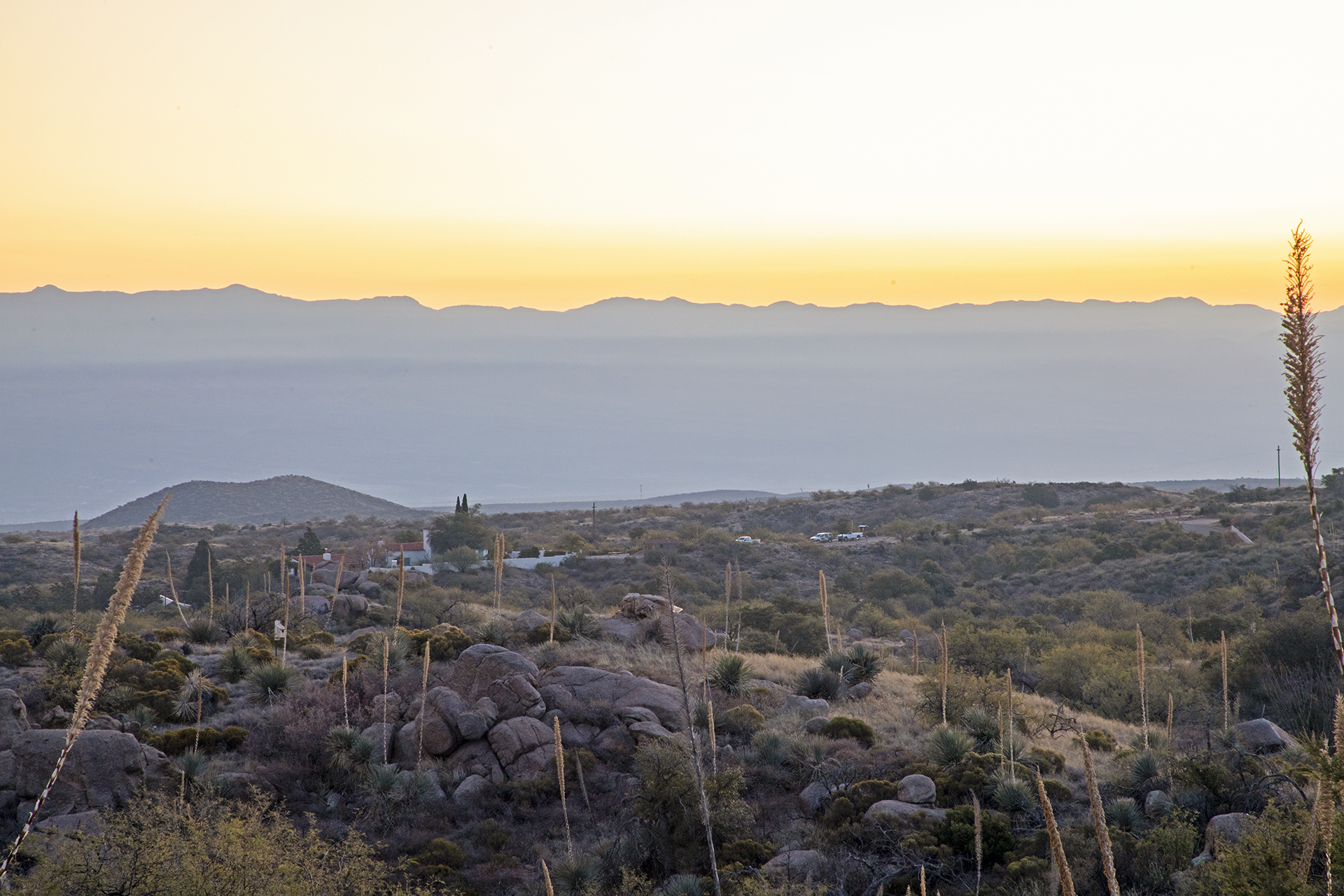
The Arizona Trail started as the dream of Flagstaff hiker and schoolteacher, Dale Shewalter. While hiking in the Santa Rita Mountains in the early 1970s, Shewalter conceived the idea of a trail stretching across Arizona from Mexico to Utah. Since that time, hundreds of trail enthusiast have been inspired by this vision and have joined together to make the Arizona Trail a reality. The trail is intended to be a primitive, long distance trail that highlights the state's topographic, biologic, historic and cultural diversity. Learn more at the expanded website managed by the Arizona Trail Association
.
Currently 94% of the trail is complete, with over 800 miles of diverse and scenic trails across Arizona, from Mexico to Utah. Volunteers are needed to help finish this legacy project, learn more about volunteering
.
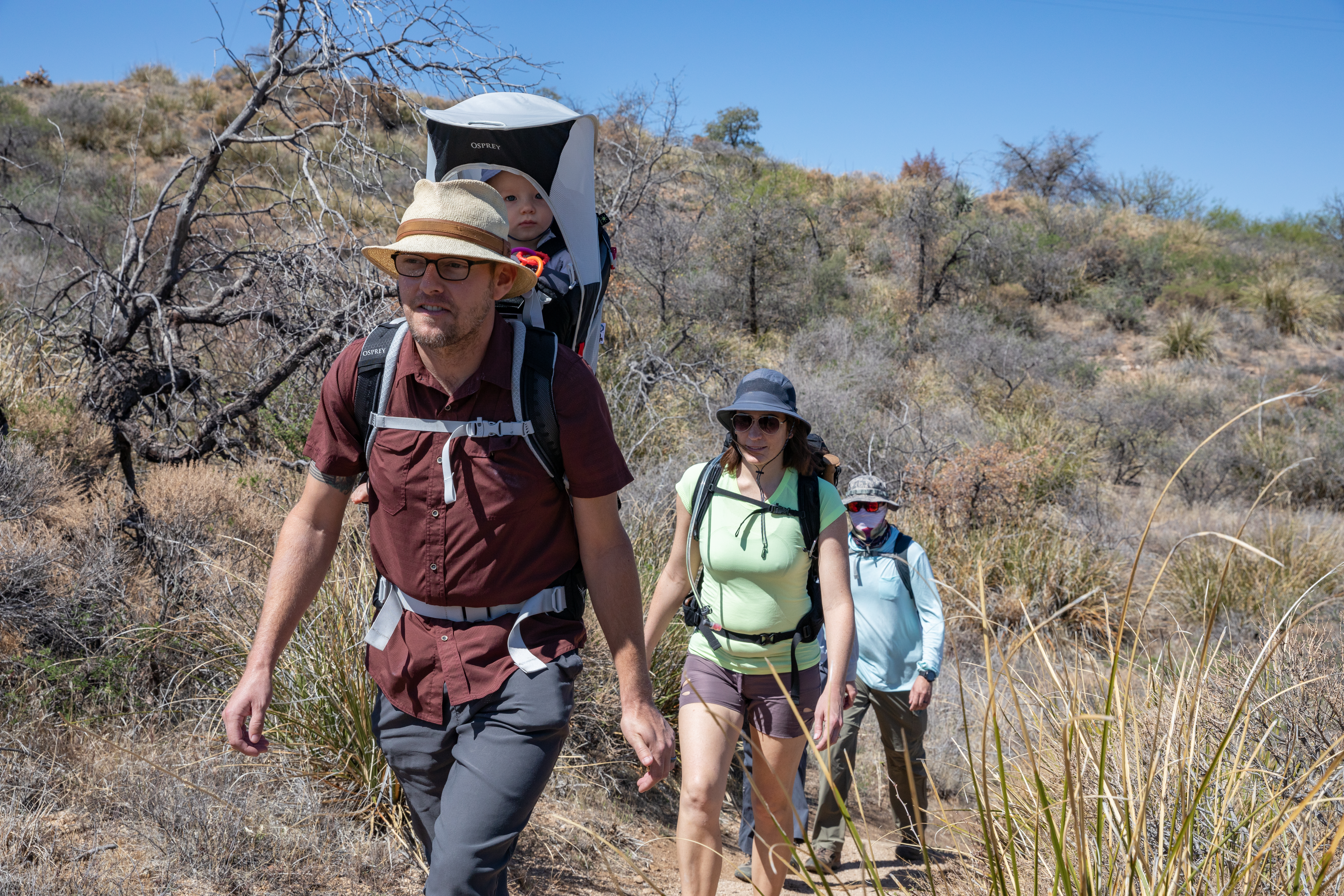
Creating a non-motorized, primitive trail connecting deserts, mountains, forests, wilderness, canyons, communities, and people;
Share the TrailUnderstanding shared-use trail etiquette can make hiking, biking, and riding trails more enjoyable for everyone. Learn some basic principles and tips for using shared-use trails. Learn more.
| Life Zone | Elevation | Plants | Geographic Region |
|---|---|---|---|
| Sonoran Desertscrub - Lower Colorado | 100–3000' | creosote, bursage, saltbush, mesquite, acacia | Tortilla Mts. to Superstition Mts. |
| Sonoran Desertscrub - Arizona Upland | 500–4500' | paloverde, mesquite, bursage, jojoba, creosote, saguaro, ocotillo, cholla | Oracle to Roosevelt Lake |
| Chihuahan Desertscrub | 3200–5000' | creosote, tarbush, acacia, ocotillo | Cienega Creek to Rincon Valley |
| Great Basin Desertscrub | 3000–6500' | sagebrush, blackbrush, shadscale, mormon-tea | Buckskin Mts. at Utah border |
| Mountain Meadow Grassland | 7500–10,000' | grasses, wildflowers | Kaibab Plateau |
| Desert Grassland | 5000–7000' | grama grasses, yucca, sotol, beargrass, mesquite, cholla | Empire-Cienega, Redington Pass, Black Hills |
| Chaparral | 4000–6000' | oak, manzanita | Superstition Mts. to Mazatzal Mts. |
| Oak-Pine Woodland | 4000–7000' | oak, pine, juniper, cypress | Huachuca Mts. to Santa Rita Mts., Rincon & Catalina Mts. |
| Juniper-Pinyon Woodland | 5500–7500' | juniper, pinyon, sagebrush, cliffrose | Hardscrabble Mesa, Coconino Rim, North Kaibab Plateau |
| Montane Conifer Forest | 6000–9500' | pine, fir, oak, aspen | Huachuca Mts., Catalina Mts, Highline Passage to Flagstaff, South Rim Grand Canyon, Central Kaibab Plateau |
| Spruce-Alpine Fir Forest | 8500–11,500' | spruce, fir, pine, aspen | Kaibab Plateau, San Francisco Peaks |
| Alpine Tundra | < 11,000' | grasses, lichen, mosses | San Francisco Peaks summit |
| Riparian Deciduous Woodland | cottonwood, willow, sycamore, walnut, ash, tamarisk | Along streams, rivers, and washes |
1985: Dale Shewalter walks the length of the state, visualizing a future route, and proposes the concept of the Arizona Trail to the State Parks Board.
1988: Dale Shewalter becomes the first Arizona Trail (Steward) Coordinator, under the Kaibab National Forest (funded by the Kaibab, Coronado, Tonto, and Coconino National Forests). The first segment of the Arizona Trail is dedicated: seven miles of the Kaibab Plateau Trail.
1993: An Intergovernmental Agreement (IGA) was signed to encourage coordination and communication among the Arizona Trail Partners. The IGA also established the Arizona Trail Steward position, which is now housed in Arizona State Parks. The Arizona Trail Steward is a temporary staff position funded by the primary Arizona Trail Partners.
1994: The Arizona Trail Association, the non-profit organization supporting the development of the Arizona Trail, was established.
1995: A Memorandum of Understanding (MOU) was signed, expanding the Arizona Trail partnerships to include all of the following partners:
Arizona State Parks
Pima County